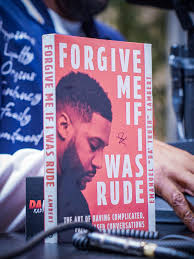
Forgive Me, If I was Rude
Forgive Me, If I was Rude
Couldn't load pickup availability
We live in a time of complicated conversations: A coworker asks what you believe about gay marriage. A family member says Christians are too judgmental. A stranger online insists the Bible is outdated and full of contradictions. Sometimes it feels easiest to avoid difficult topics completely. What if, instead, you were prepared to talk about those ideas in a way that reflected both God's truth and love?
That question sits at the heart of Forgive Me If I Was Rude: The Art of Having Complicated, Faith-Based Conversations (David C Cook, Oct. 6, 2026), a new book from author, musician and apologist Emanuel Lambert (Da' T.R.U.T.H.). Bridging the gap between intellect and empathy, the book offers a four-step framework for engaging well in emotionally charged conversations. Each chapter closes with “Curious Conversations,” which are real sample dialogues between a believer and a skeptic that model what a thoughtful, non-defensive answer sounds like in the moment.
“We are living in a time when nearly every conversation is complicated,” writes Lambert. “Forgive Me If I Was Rude is here to help you, so you can know not only what to say in those scenarios but also how to say it.”
This timely book helps readers:
▪ Gain confidence in what to say and how to say it
▪ Learn biblical answers to questions they wrestle with themselves
▪ Understand how to remain physically and emotionally grounded when conversations turn tense
▪ Turn defensiveness and accusations into curiosity and understanding
Drawing on more than two decades of experience as a touring artist, teacher and ministry leader, Lambert brings both real-world engagement and academic depth to the subject, having trained formally in apologetics alongside his work on stages and in churches around the world. The result is a strategic field guide for hard conversations about faith and culture, one built to help readers bring apologetics into real-world dialogue and help readers meet someone else's longing for God with what they already know. As Lambert puts it, the goal is learning what to say and how to say it, so that conversations about faith open doors rather than close them.
Share